
Modern Light
An 80s renovation had messed with this modernist beauty in Beaumaris, but its fine bones attracted a devoted buyer keen to renovate sensitively for contemporary comfort. Cantilever’s joyful refurbishment heroes timeless architecture, enhances functionality and flow, and delights with subtle colour and textural detailing.
Photographer
Martina Gemmola
Key Suppliers
Gallery Smith Southwood Smith St Bazaar Pepite
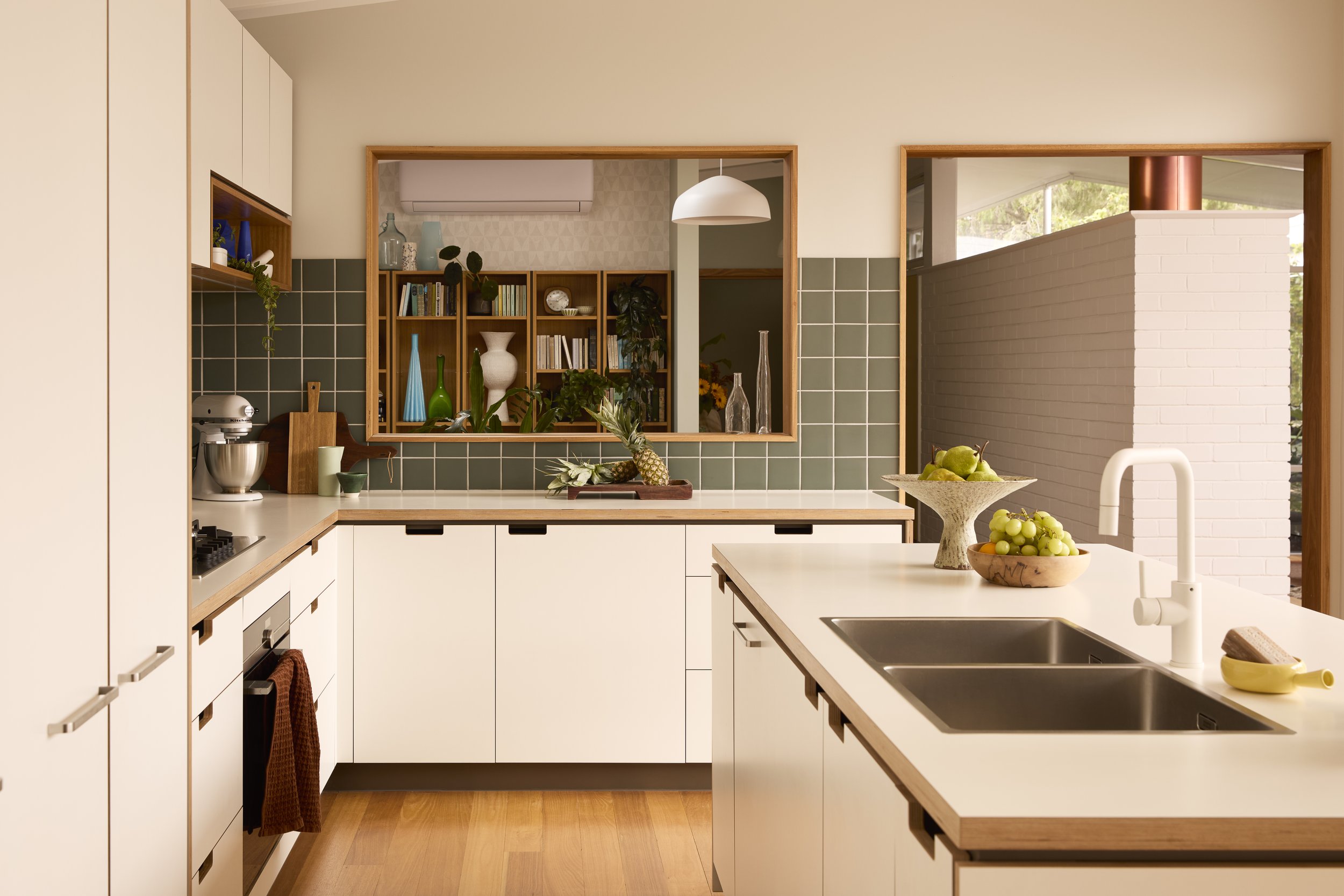
Michelle was new to Melbourne and unfamiliar with Beaumaris and its modernist architecture until she fell for a classic example and bought it the same day. She’d grown up in Hobart in a mid-century home built by her parents – a beautifully proportioned “rectangle full of life”, she recalls. The location felt “so green and near the beach” it reminded her of home, and the late-1950s, architect-designed house felt wondrously familiar.
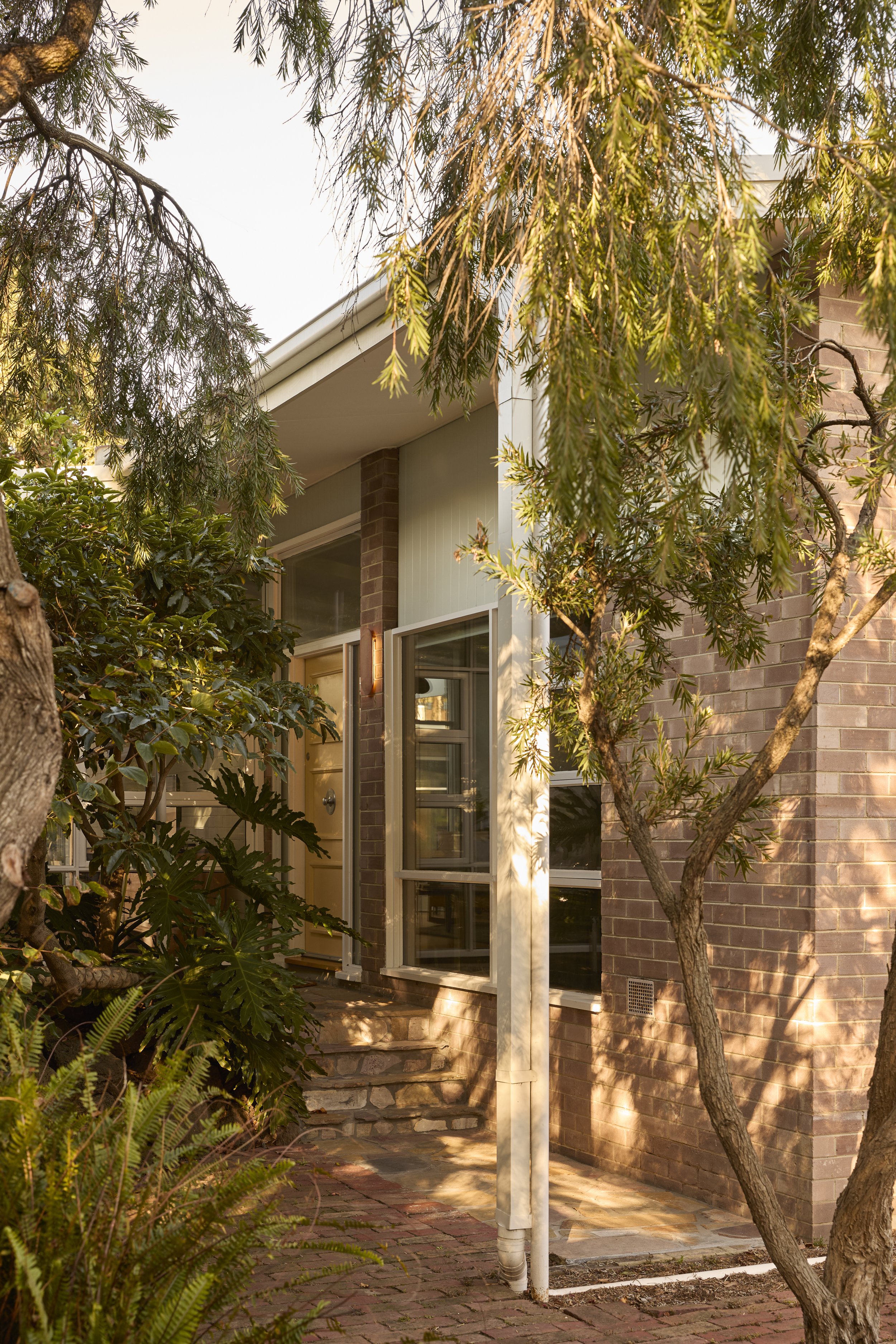
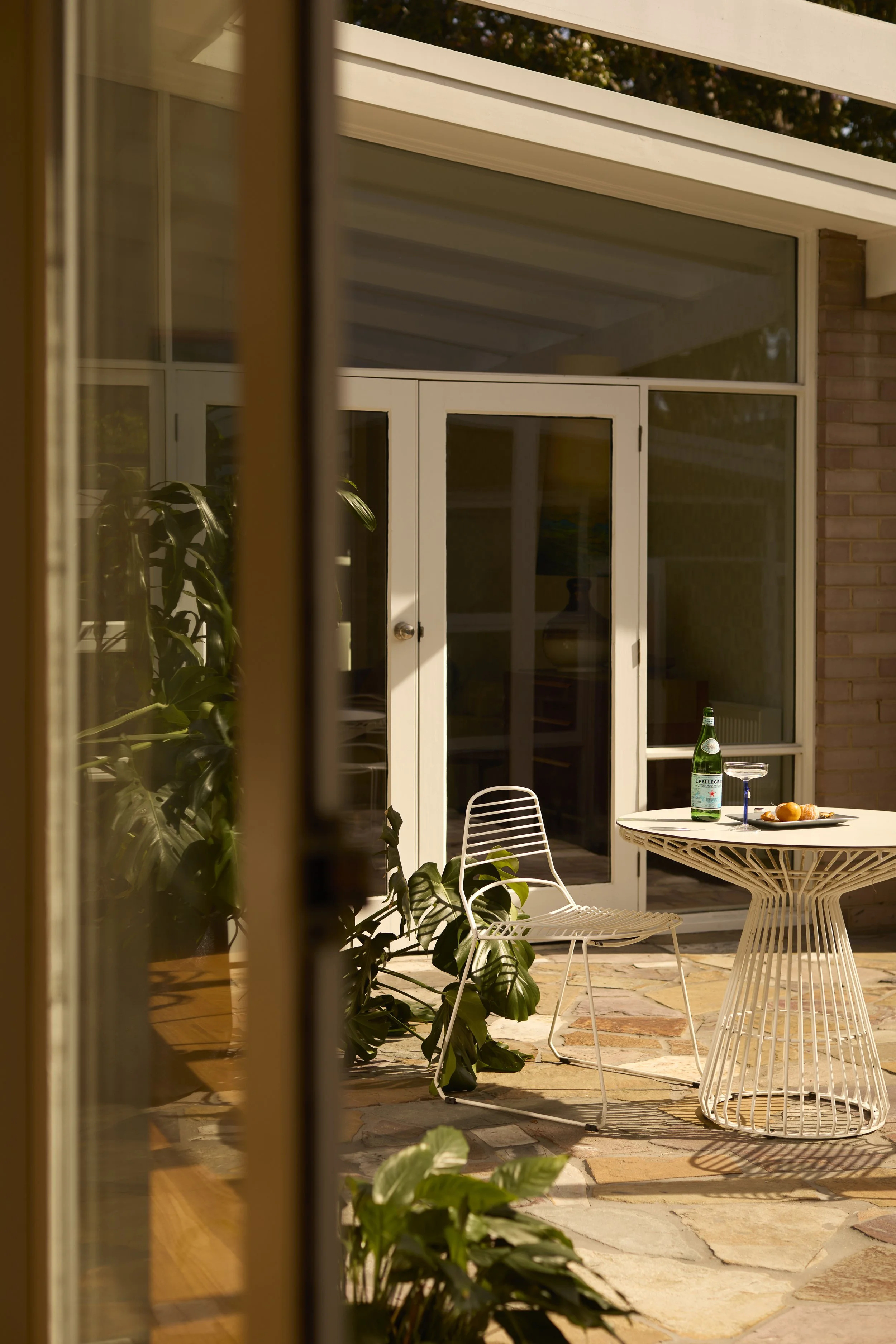
Michelle and her two daughters “were attracted by the floor-to-ceiling windows and all the light,” she says.
“They’re humble homes but just beautifully built, and have a great feeling about them. It was covered under layers of stuff,” she says of a 1980s renovation to kitchen and bathroom, “but there was a Crazy Paver courtyard, vaulted ceilings, and brick fireplace, and we knew it had good bones.”
— Michelle, Client
Some of Australia’s best-known architects designed their earliest homes in the area, including Robin Boyd, Roy Grounds and Peter McIntyre. Its modernist treasures are perfectly proportioned, compact, flexible, earthy in their materiality, and carefully oriented to capture natural light, breezes, and landscape. Michelle joined local group Beaumaris Modern, whose aficionados and fellow refurbishers happily shared knowledge and networks. Designers, builders and tradespeople all require specialist skills and dedication to sensitively upgrade thermally leaky mid-century homes for contemporary comfort and recreate or respond to architectural features often altered or removed by past renovations.
With assistance from devoted builder Martin Lacey, Michelle project managed an upgrade of the building’s fabric to address termite damage and improve thermal performance, including double glazing stunning original windows integral to the design. She sought help from interior designers to refresh the interior and address an “awkward” kitchen/laundry area. Working within the existing footprint to preserve the existing balance of built form and garden was a central requirement.
“I had lovely people who’d come in to try and help with the reno, but
I really clicked with Kylie from Cantilever”
— Michelle, Client
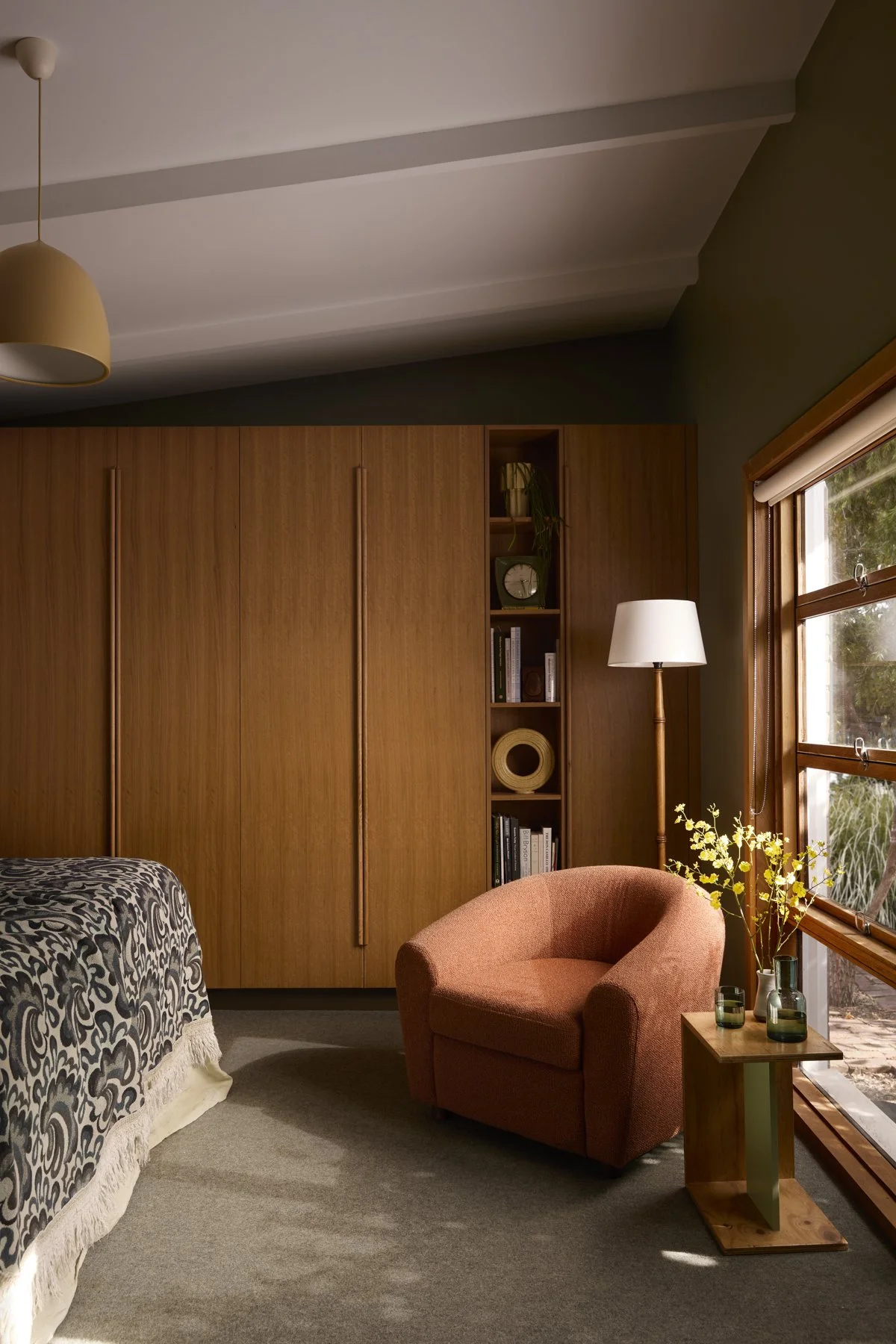
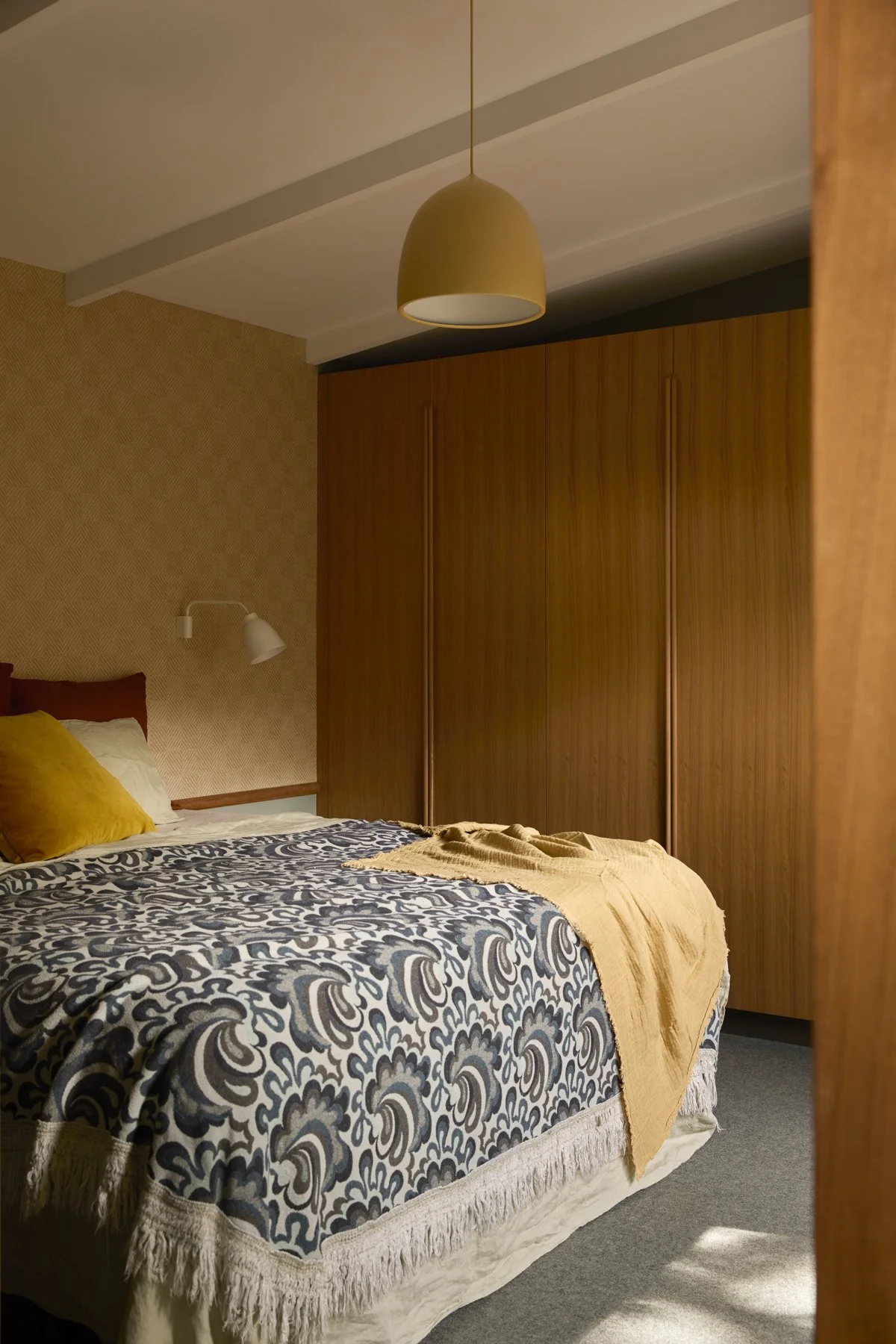
She recognised a designer who shared her love of colour, and brought a subtle, painterly approach to applying it across paintwork, tiles, carpets, soft furnishings and lighting design. “I said, ‘I don't have the confidence to put together a house that isn't all-white, but that’s what I want’. Kylie put together three concepts. I resonated strongly with elements of two, and she found a way to integrate them.”
“Our Interiors service is designed to create highly personalised project outcomes,” Kylie explains, “so we explore joinery and surrounding room finishes from a holistic perspective.
Our process includes a series of palettes – typically two or three – which we develop in response to feedback. This collaboration gives clients confidence their perspective is woven into their home without the burden of making each decision from scratch.”
— Kylie Forbes, Creative Director
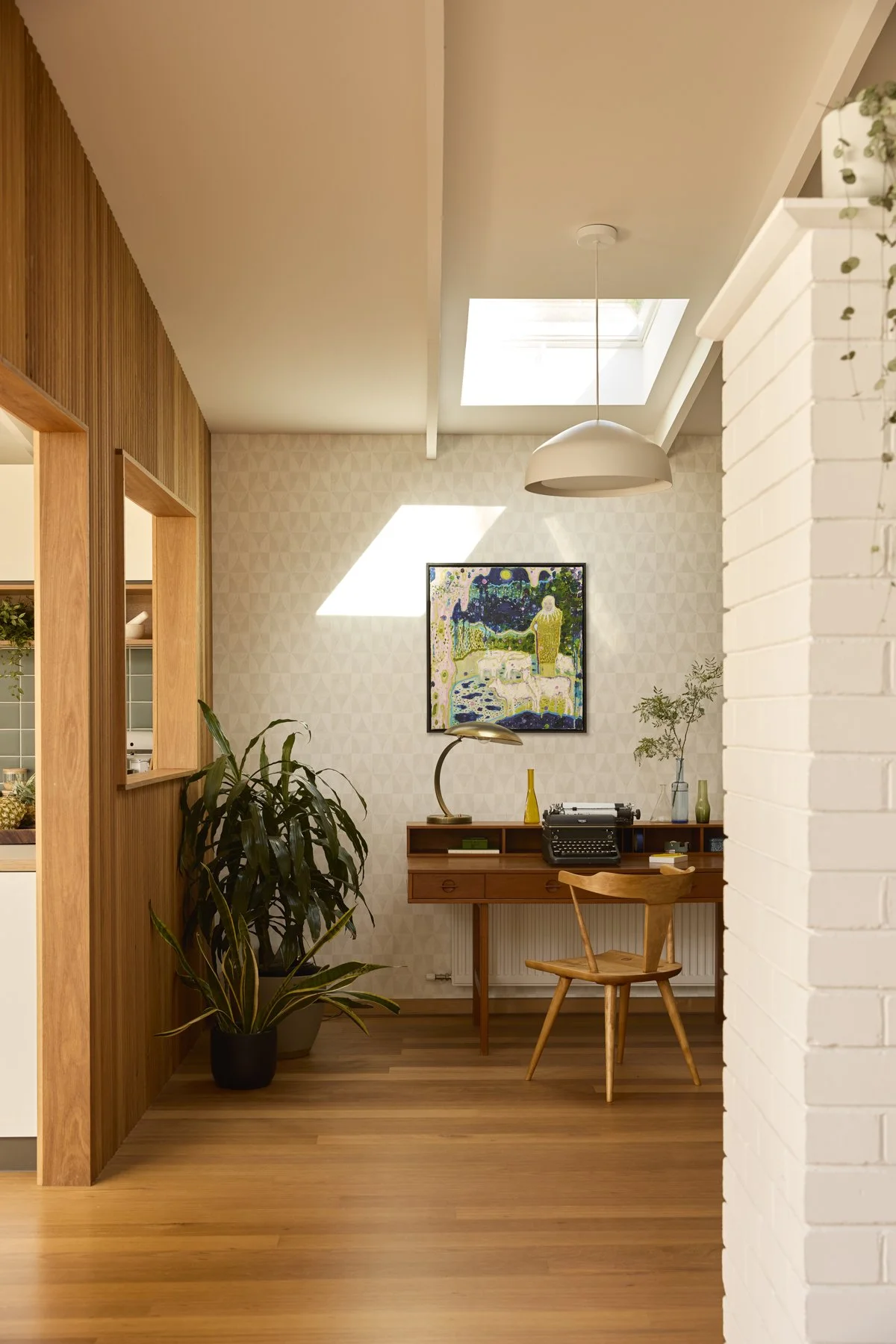
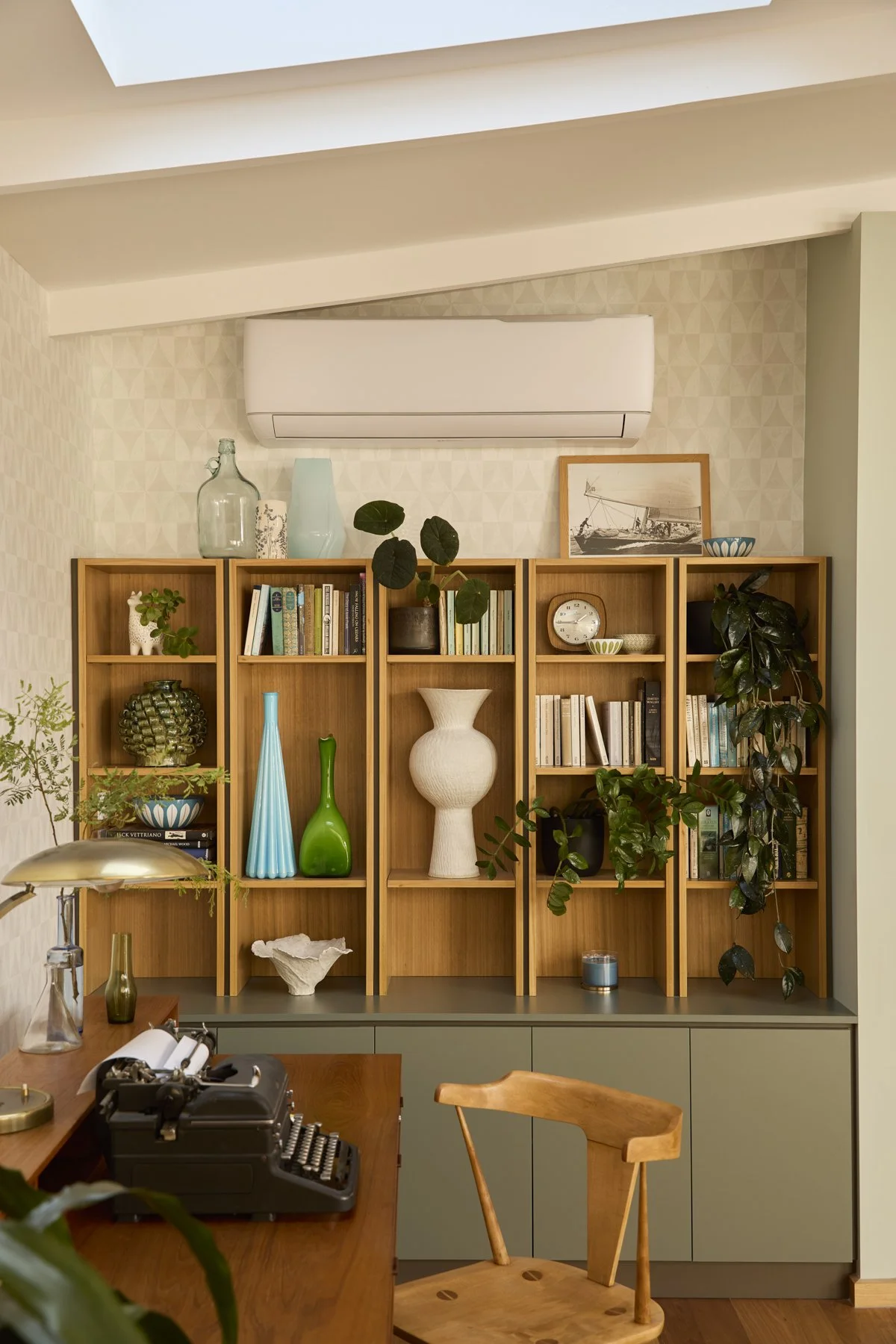
Mid-century refurbishments are a Cantilever specialty, and the clean lines of its classic K3 system are designed to bring contemporary functionality and flow to kitchens and laundries with a pared back style that compliments original architecture. This teams naturally with K2 Blackbutt joinery, which extends the function and flow to living spaces, study nook and bedrooms. Handcrafted detailing like K2’s elegant, solid Blackbutt Beach Road doorhandle sits comfortably alongside Michelle’s mid-century timber furniture collection.
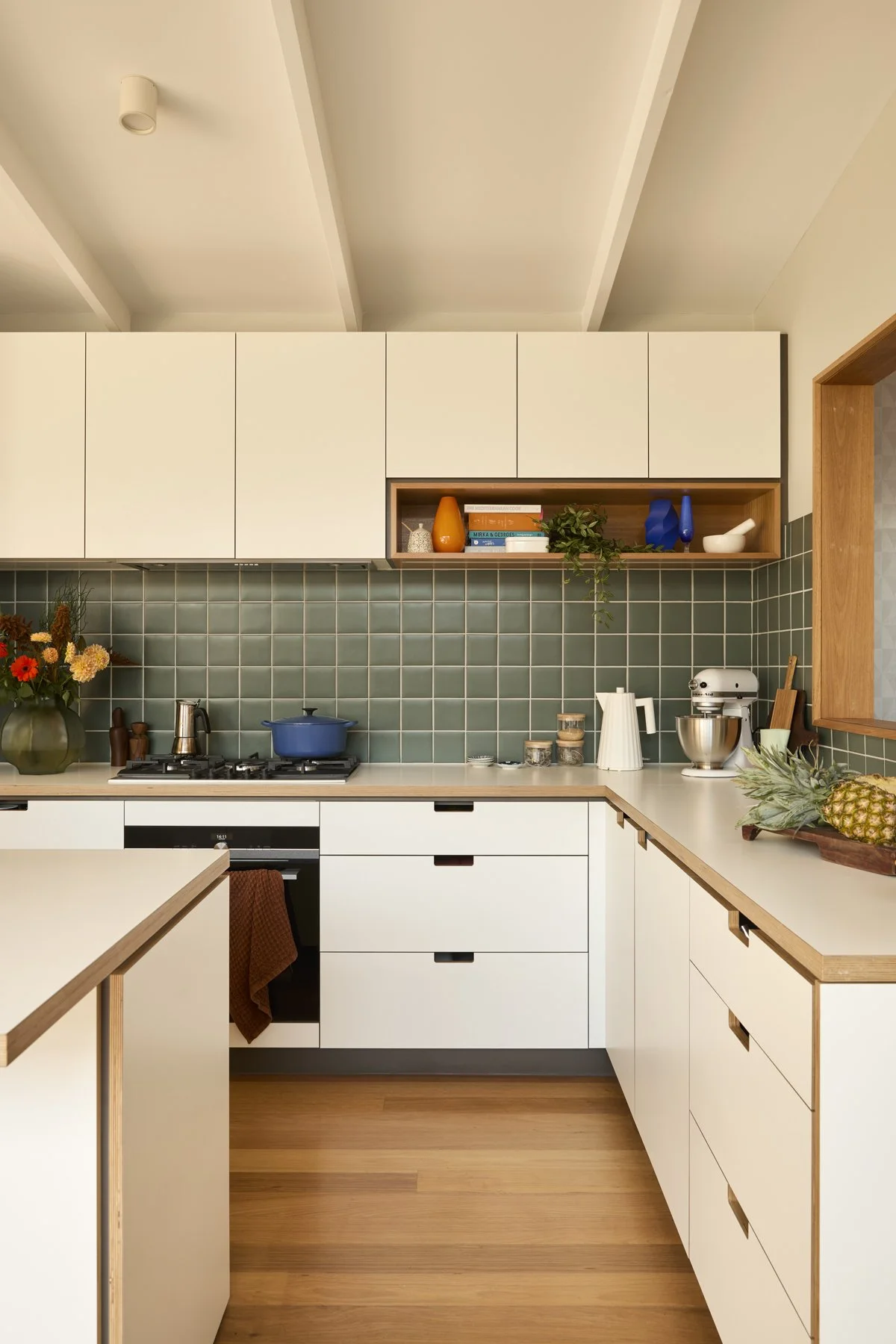
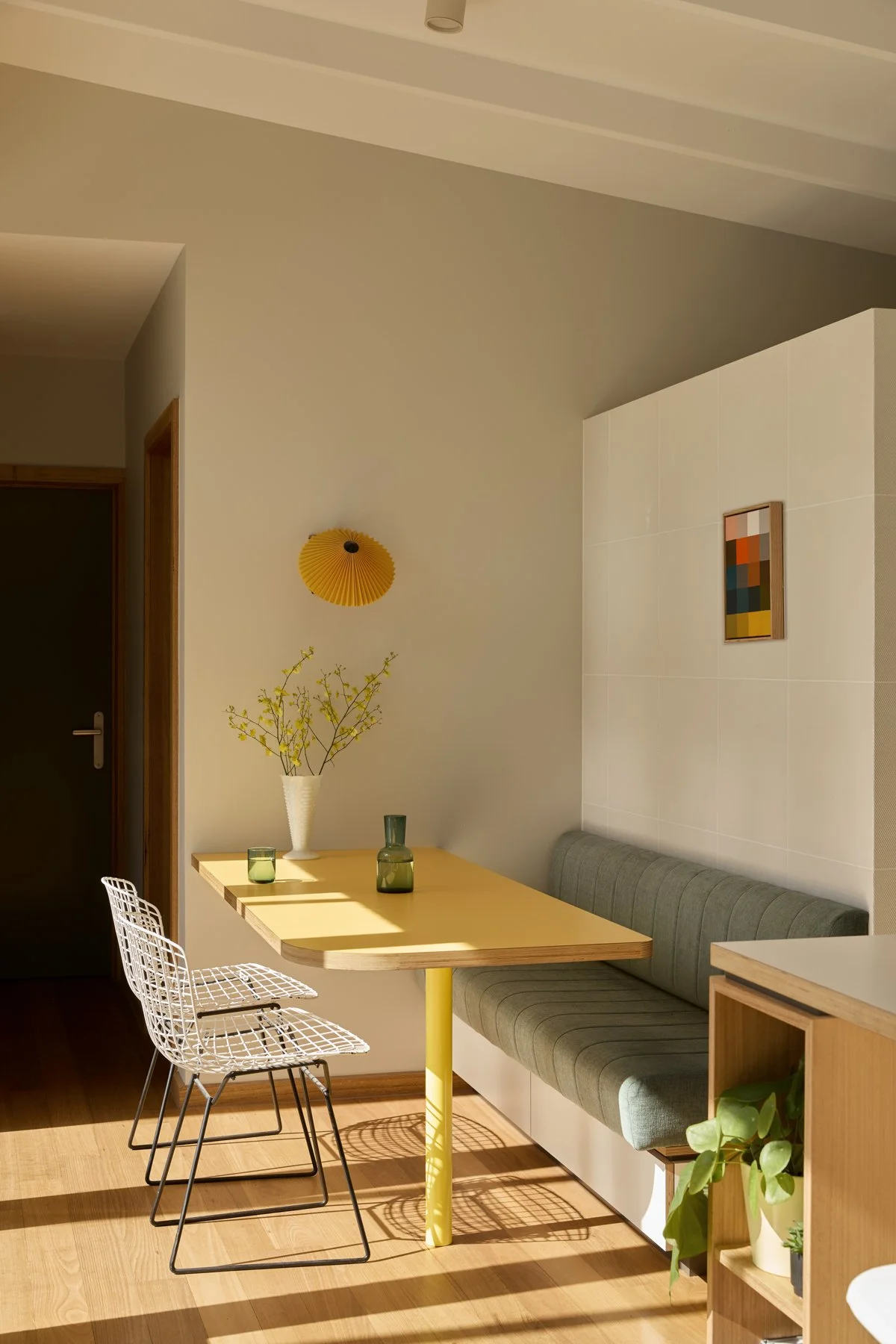
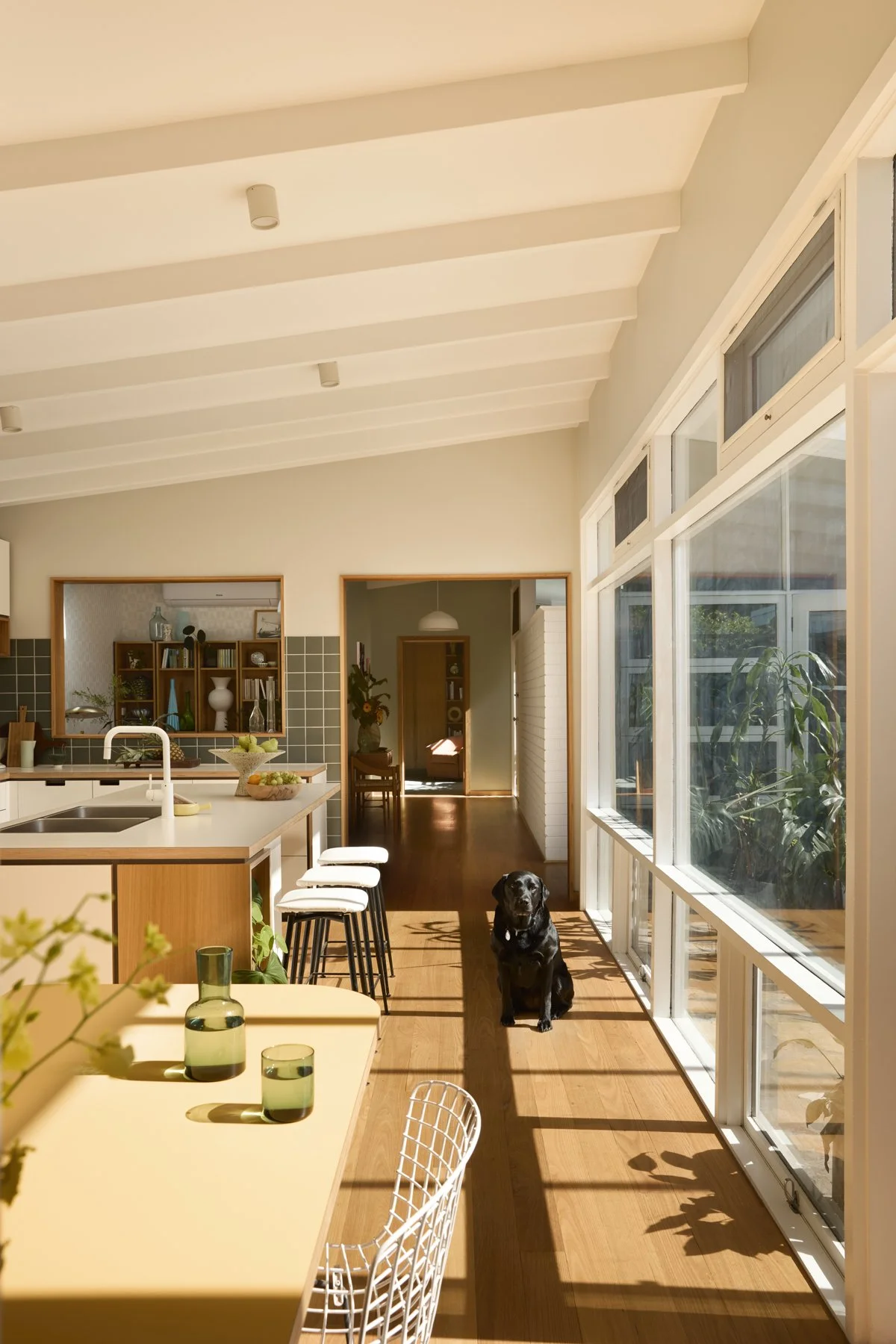
The introduction of a dining nook helped resolve spatial planning and became a favourite feature. “We integrated a compact laundry to flow from the kitchen and pantry zones,” Kylie explains. “Introducing a tiled nib wall provided space for a banquette seat and table. This utilised a compact space efficiently and provides a gorgeous injection of colour adjacent to the crisp white Laminate on Ply K3 kitchen. Working within footprint is another specialty. We’ve learnt to reconfigure floorplans in response to the architectural language, often discovering new spaces in the old.”
The interiors palette took its cues from two-bathroom selections Michelle made prior to Cantilever’s involvement. “The Japanese Inax and yellow penny round tiles became early references that influenced my response,” Kylie says, “Both feature a crispness of form, with graphic repetition and clarity of tone.”
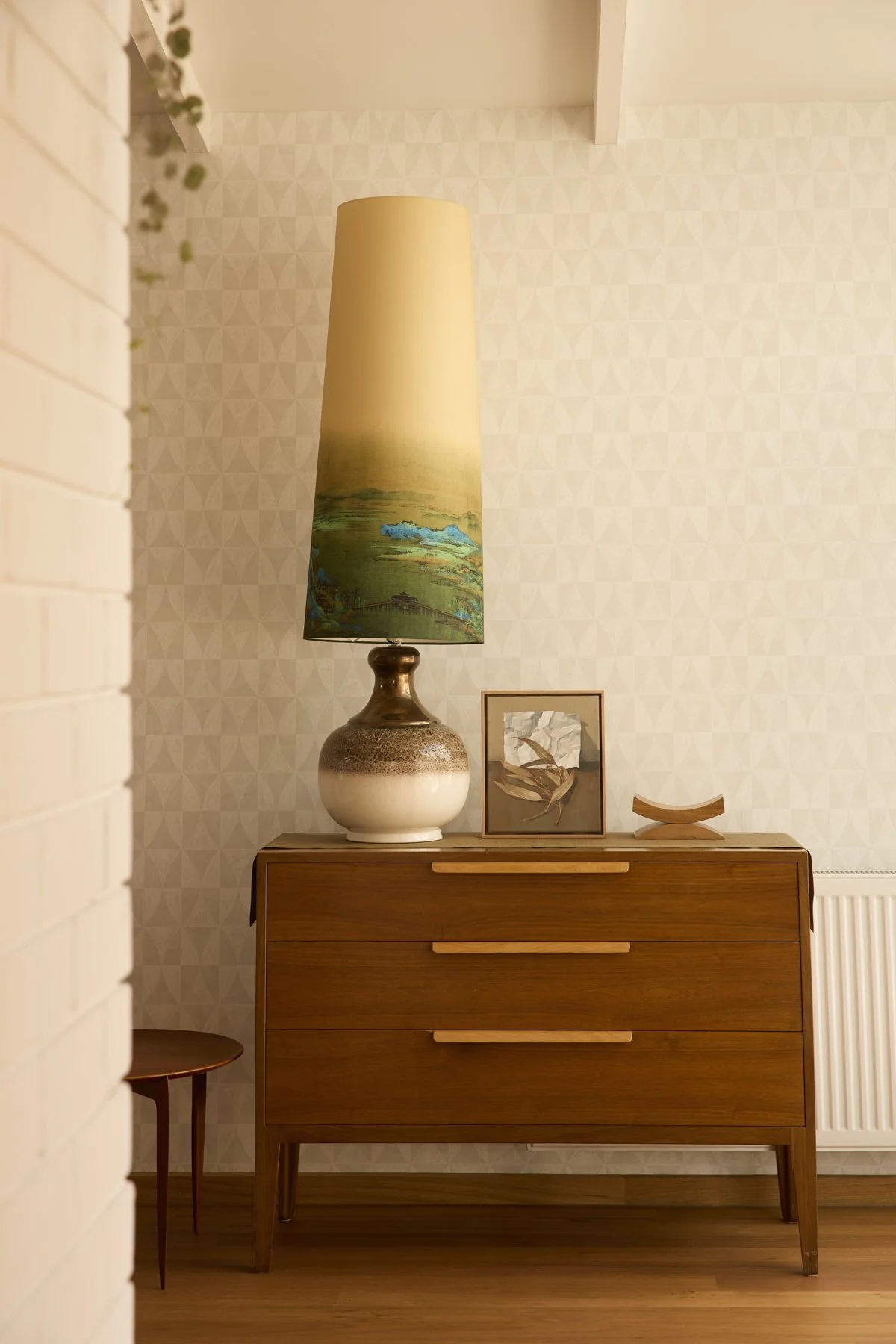
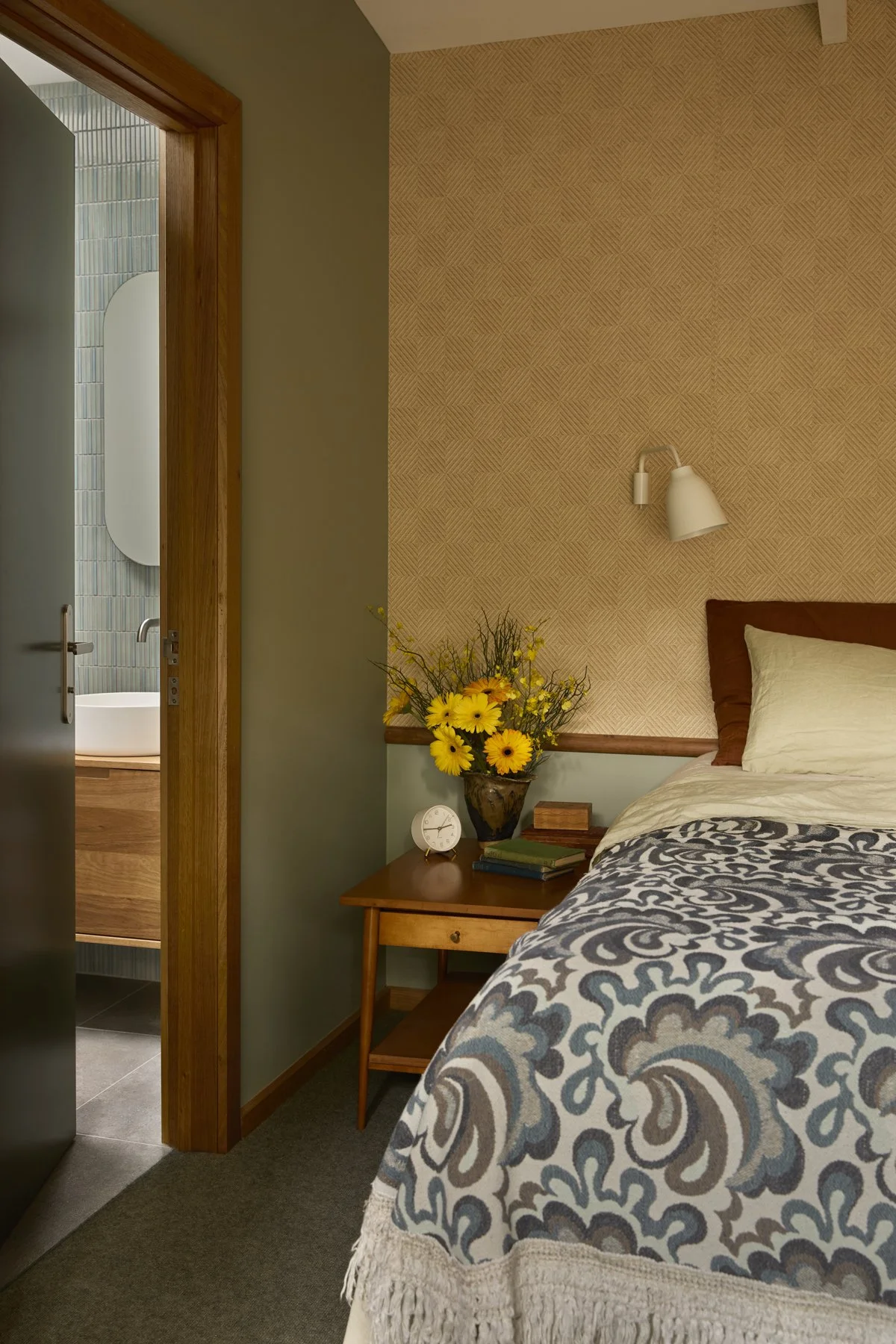
These themes abound, from the deep green of the kitchen’s tiles to bedrooms’ ornate seagrass wallpapers and the playful orange pop of the dining nook’s Coco Flip wall sconse. “My formal training in Fine Art has greatly influenced my approach to my interior work,” Kylie says. “I was taught to encourage the movement of the eye across the canvas through dispersion of colour. I relate this technique to the spatial journey of a home, and apply colour to encourage a visual exploration.”
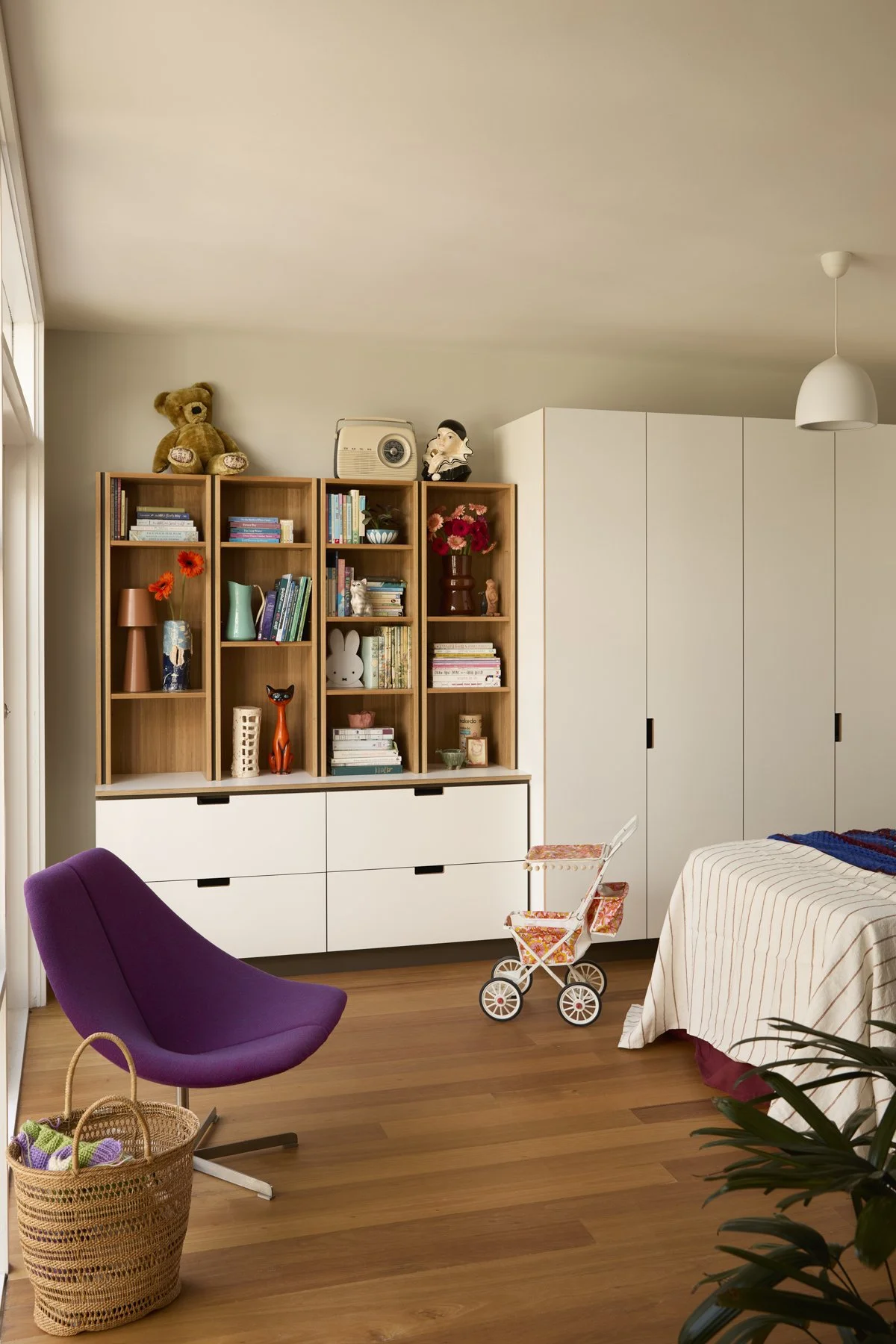
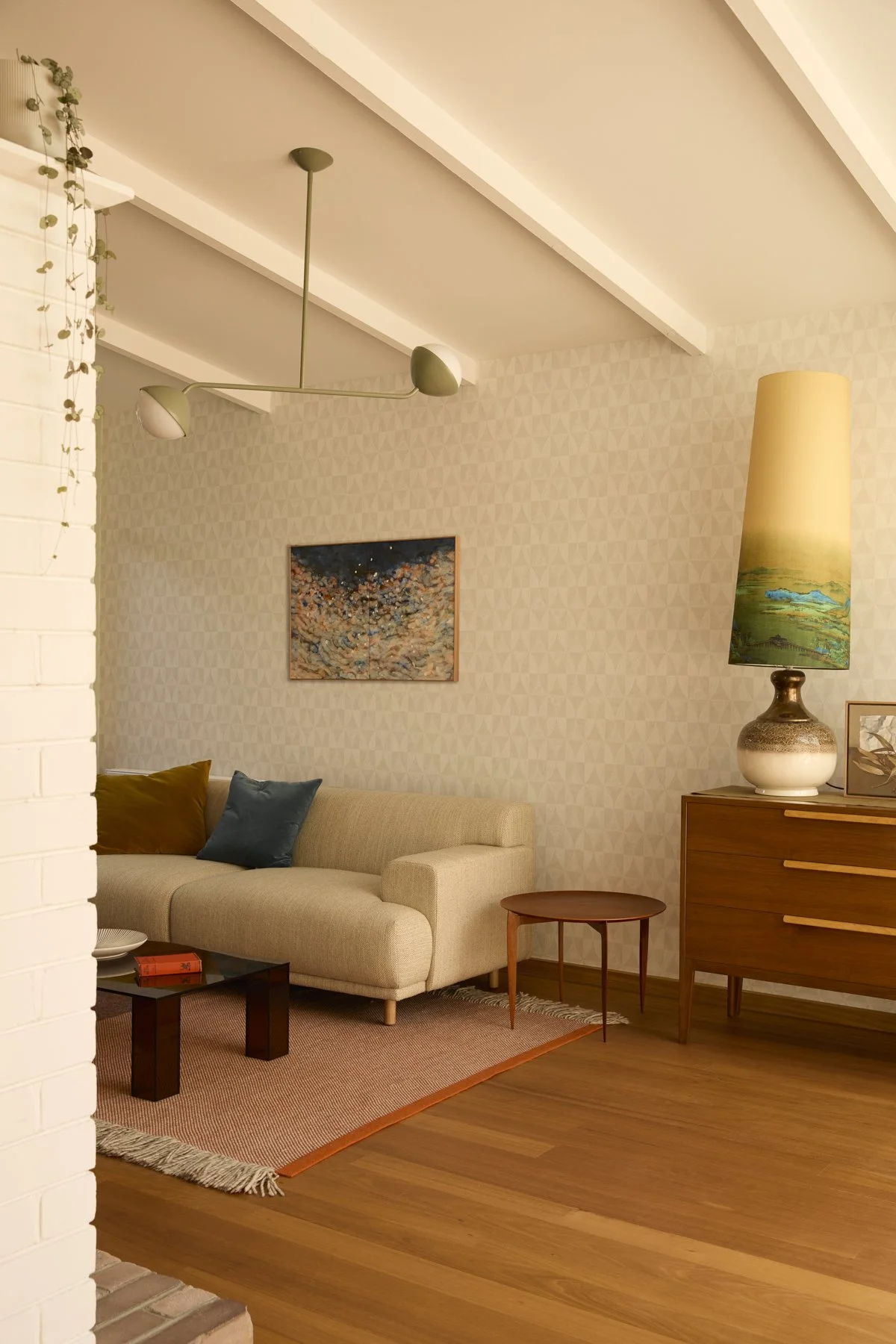
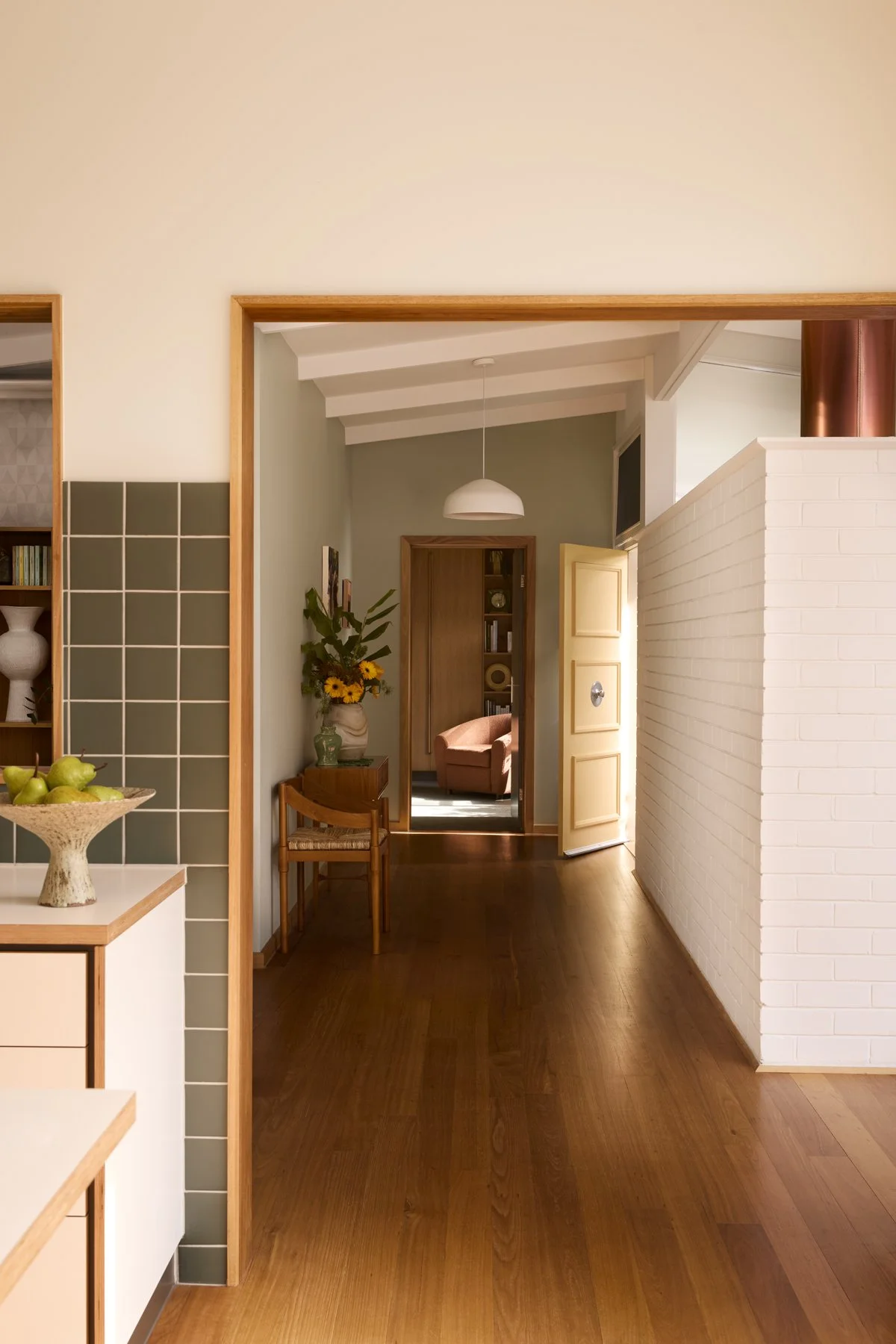
For Michelle, coming home to her refurbished modernist treasure is a journey that never gets old. “It truly is a joyful place to live in,” she says. “It's uplifting.” Visitors of all ages comment on its calmness.
“Looking at their website I thought Kylie and Travis would be too cool for me,” she adds with a laugh.
“But they really are such beautiful people, so professional and respectful, and they’ve got a lovely bunch of people working for them.
I don’t know if I have another renovation in me, but I know who I’d ring straight away.”
— Michelle, Client
All the Mod Cons
Few writers have done more to celebrate Melbourne’s modernist gems and inspire thoughtful refurbishments than Patricia Callan, founder of Modernist Australia. She was Cantilever’s guest at its inaugural EDIT Bookclub event in 2024, when she shared insights from her book The New Modernist House: Mid-century homes renewed for contemporary living.
She’s effusive in her praise for Beaumaris Modern – locals whose profile raising, events and advocacy has literally saved homes from demolition. “Thank goodness for them,” Patricia says. “They argued for it long before other places. Because of that it's survived, become a bit of a trademark and a selling point, and they’re reaping the rewards. That builds community around the design movement, which is unusual – especially in Australia.”
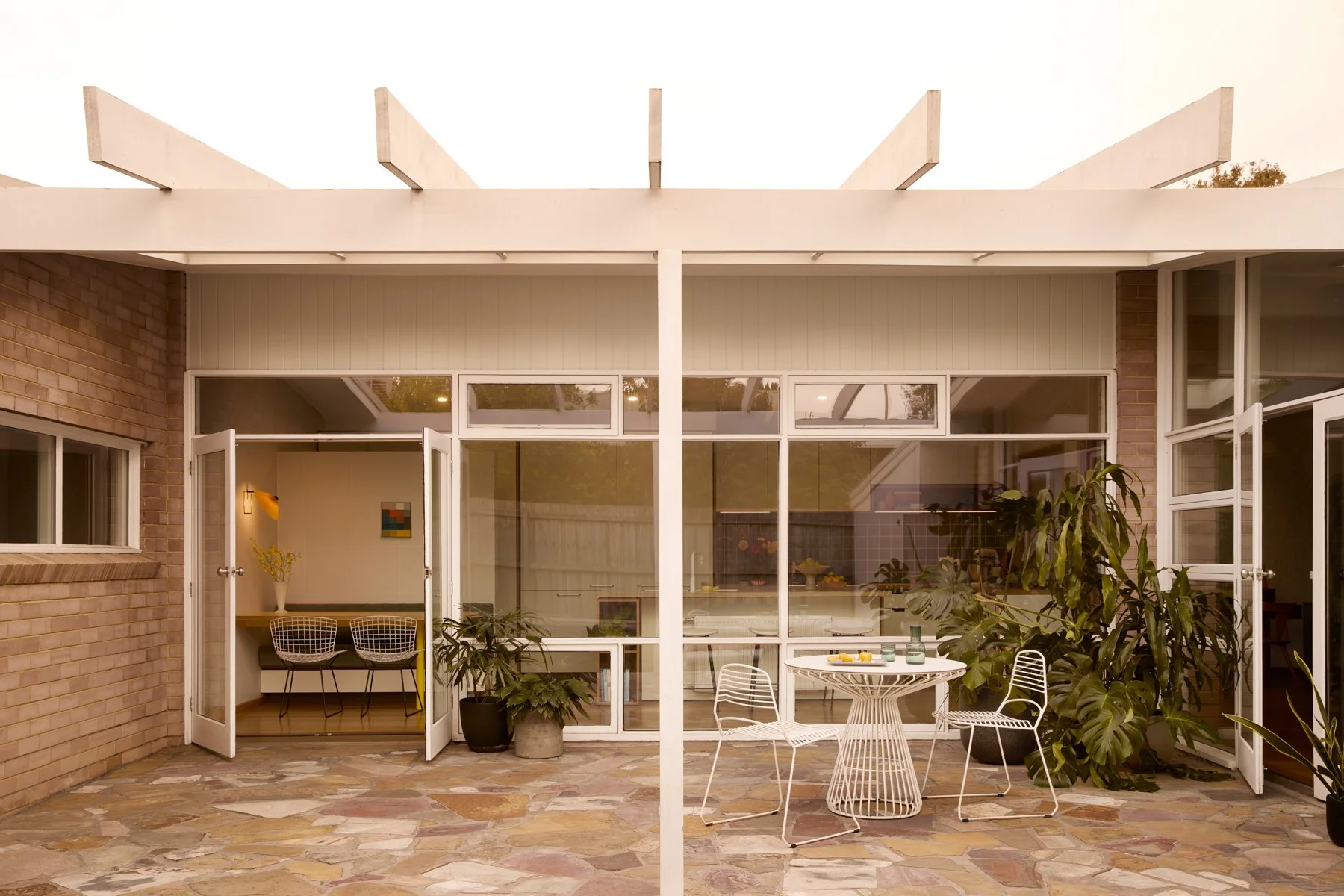
Patricia says Beaumaris embraced modernist architecture early, in the 1940s and 50s, ahead of suburbs like Eltham. It was home to many artists and designers who recognised the enduring value of its timeless attributes and modest scale. “It’s designed for living,” she says. “The use of crafted materials, orientation to the north for beautiful sunlight, floor-to ceiling-timber windows to sit in front of, and just a beautiful attention to detail. The original modernist homes effectively deconstruct what the concept of a home even is. Deference to the environment” is central, “and nothing's off the table. So if you were going to divide a room, it didn't have to be with walls. It could be a sunken or raised space … or a screen, drawing from Japanese architecture, which was a big influence.”
Refurbishing mid-century homes well requires deep pockets for “all the boring stuff” required for contemporary thermal comfort, she says. Homeowners also need help from skilled tradespeople who can save detailing worth reinstating as they’re “literally taking the place apart”, she says. “Builders often talk about the fact that people aren't being trained in these trades except in very specialist firms, so that's a big challenge. You must have trades who share a love and respect for it … and can say, ‘Actually, that’s good, we should keep that’. Otherwise you can lose things along the way that you didn't know about at the time as the owner.”
Patricia says the best refurbishments aim, as Kylie and Michelle have done, for a contemporary response to existing needs and conditions, including previous renovations, rather than imitation. “That means doing your homework about what fits with the same ethos, without trying to turn it into some kind of set from Mad Men.”